Image credit: NIAID/NIH
Infectious disease surveillance is a vital epidemiological tool used to monitor the health of a population. It helps measure the current burden of disease by tracking trends, identifying outbreaks, and showing the epidemiology of illness, including which age groups or communities, are most affected. Surveillance also acts as an early warning system for emerging health threats, which is essential for deciding when interventions, such as vaccinations, public health messaging, or other control measures, are needed. (1,2)
Mpox is a viral illness that spreads through close physical contact and may cause symptoms such as rash, fever, and swollen lymph nodes. A clade is a genetically related group of viruses that share a common ancestor and may differ in how they spread or how severe the disease can be. Tracking clades matters because they can behave differently: Clade IIb showed in 2022 that mpox could sustain human-to-human spread globally; Clade Ib also spreads between people and may be associated with more severe disease. Early research on clade Ib shows greater viral spread and higher virulence than clade IIb in a mouse model. (3,4,5,6,7)
A previous Disease Daily article described the WHO’s 2024 emergency declaration and the early global concern around clade Ib. This article builds on that context by using Global.health tracking data to examine continued surveillance of clade Ib as of early 2026. (8)
Since 2024, reports of clade Ib outside of historically affected regions have raised questions about travel-associated cases, local transmission, severity, and gaps in detection. The Democratic Republic of the Congo remains central to understanding the recent clade Ib outbreak, as mpox has long been endemic there, and the 2024-2026 epidemic affected all 26 provinces. On April 2, 2026, the DRC lifted its national mpox emergency, marking a major turning point, but officials emphasized it was “a victory against the epidemic, not against the virus.” Yet the end of the emergency phase did not mean surveillance could stop, as officials still needed to monitor local transmission, severity, and detection gaps. (9,10)
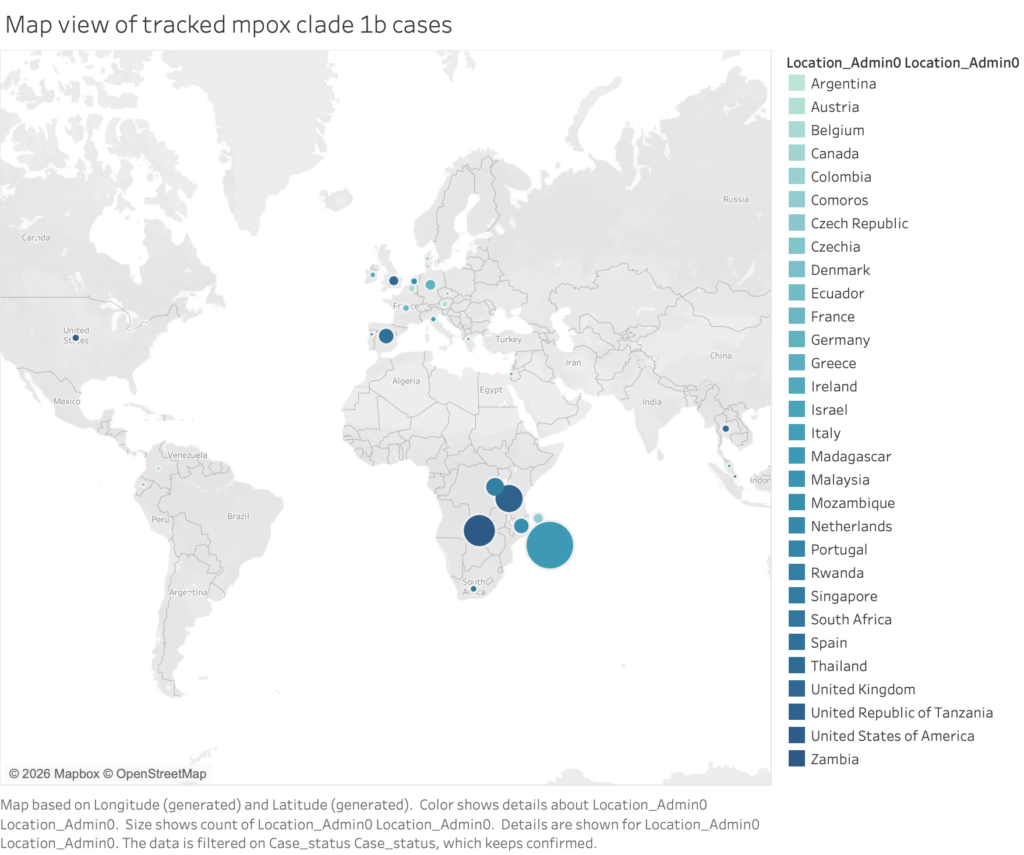
Figure 1: Map view of tracked mpox clade 1b cases
Global.health’s tracking efforts show that clade Ib activity continued across multiple countries in early 2026. That is important because the end of an emergency declaration does not always mean the end of meaningful transmission. Between January 16 and April 27, 2026, the dataset included 1,202 confirmed clade Ib records across multiple countries, suggesting that clade Ib remains an active surveillance concern. Reports increased over the first months of the year, with 155 confirmed records in January, 375 in February, 205 in March, and 467 in April. Madagascar accounted for the largest share of confirmed records, with 950 cases. Additional records appeared in Spain, the United Republic of Tanzania, Germany, Zambia, South Africa, the United Kingdom, Portugal, Belgium, the United States, Comoros, France, Austria, Italy, and Singapore. This data suggests that clade Ib surveillance needs to remain global, even when the largest burden is concentrated in a few countries. (11,12)
Of the cases where we know travel history, there were more cases with no recent travel than recent travel, suggesting that some infections were likely locally acquired rather than imported. Published reports have also described clade Ib spread through close physical or sexual contact networks, including among gay, bisexual, and other men who have sex with men. This makes clade Ib harder to interpret from case counts alone, because the same increase in cases could reflect travel, local transmission, or both. (13,14)
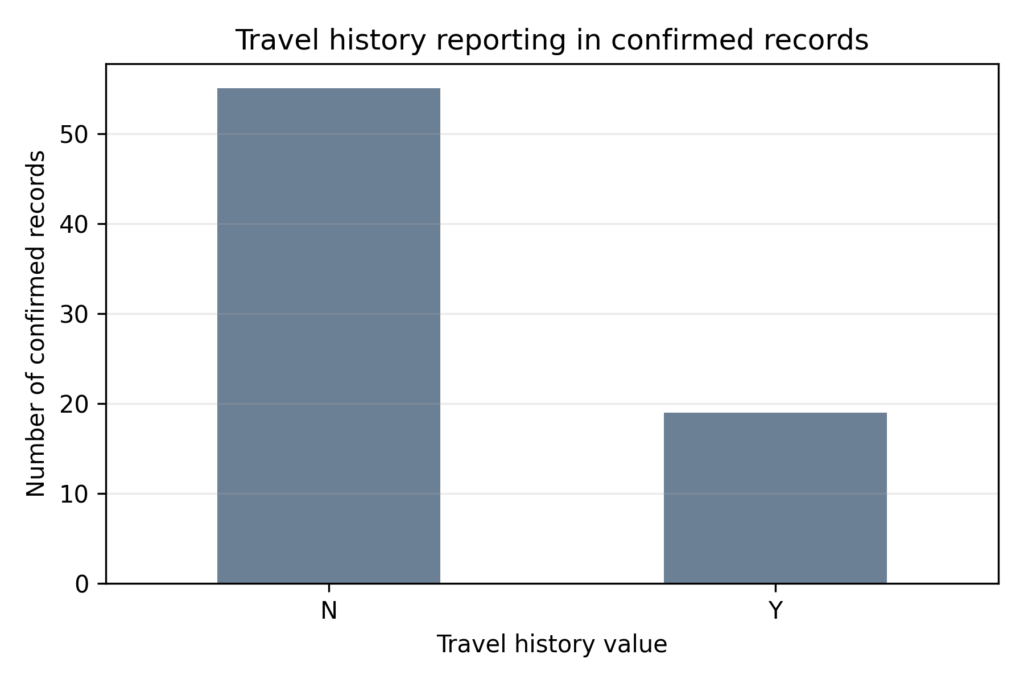
Figure 2: Travel history reporting in confirmed records.
The surveillance challenge is not only where clade Ib is appearing, but also how the virus itself may be changing. Recombinant mpox cases reported in the United Kingdom and India are another layer of concern. These viruses contained genetic material from both clade Ib and clade IIb, suggesting that different mpox lineages are circulating closely enough to mix. This indicates mpox is not only spreading across regions, but also evolving in ways that routine testing may not fully capture. Genomic surveillance is therefore important for detecting new variants, tracking transmission, and understanding whether these changes affect future risk. (13,14)
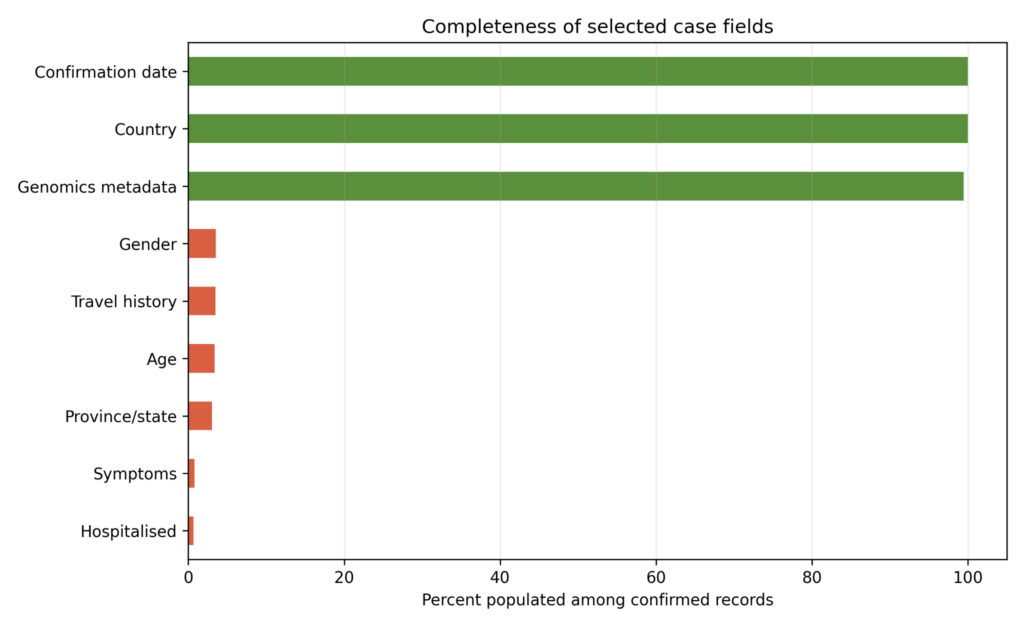
Figure 3: Completeness of selected case fields.
Global.health tracking has shown that clade Ib remains an active and evolving public health concern. As Figure 3 shows, the dataset is strongest for confirmation date, country, and genomics metadata, but key epidemiological fields such as travel history, exposure history, symptoms, hospitalization, and clinical outcomes remain much less complete. These gaps matter because they limit what can be said about who is affected, where transmission is happening, and how cases are connected. Continued clade-specific surveillance and more complete reporting will be essential for identifying geographic hotspots, high-risk groups, and transmission pathways that can guide public health action.
Bibliography:
- https://pmc.ncbi.nlm.nih.gov/articles/PMC7149515/
- https://www.who.int/emergencies/surveillance
- https://www.who.int/news/item/28-11-2022-who-recommends-new-name-for-monkeypox-disease
- https://onlinelibrary.wiley.com/doi/10.1155/ipid/2522741
- https://www.nfid.org/infectious-disease/mpox/
- https://evidence.nejm.org/doi/full/10.1056/EVIDpha2500319
- https://www.nature.com/articles/s42003-026-09701-z
- https://www.diseasedaily.org/2024/10/04/mpox-and-the-who-declaration-of-a-public-health-emergency/
- https://beaconbio.org/en/report/?reportid=2d6eb9e8-5390-422a-b16b-df49f5613a8b&eventid=12e5dd59-09db-45e8-b279-910c56a82d76&pathogens=16eb05a8-610e-4b1e-a63a-5c75302deb33
- https://www.rfi.fr/fr/afrique/20260402-rdc-le-ministre-de-la-sant%C3%A9-annonce-la-fin-de-l-alerte-nationale-contre-l-%C3%A9pid%C3%A9mie-de-mpox
- https://worldhealthorg.shinyapps.io/mpx_global/
- https://beaconbio.org/en/
- https://www.ecdc.europa.eu/en/news-events/local-transmission-clade-1b-mpox-cases-detected-eueea-ecdc-urges-renewed-vigilance
- https://www.rivm.nl/en/mpox/current-information-about-mpox
- https://ukhsa.blog.gov.uk/2018/02/21/disease-detectives-keeping-track-of-new-and-emerging-infectious-diseases/
- https://cdn.who.int/media/docs/default-source/_sage-2026/who-rapid-risk-assessment—mpox—global—version-61f51081e-3348-4c79-a943-83c7b9858f9a.pdf?sfvrsn=904b2754_1&download=true